

Micronutrient Foundation / Men's Wellness
Essential Vitamins & Minerals
Consistency is the cornerstone of any successful health routine. Daily vitamins and minerals for men provide the necessary foundation for long-term wellness. In a world where soil depletion and food processing reduce the nutrient density of our meals, supplementation acts as a reliable insurance policy. Our focus is on identifying the core micronutrients that support energy production, immune strength, and structural health — tailored to the unique demands of daily life in Indonesia.
Orientation
What This Guide Covers
This resource breaks down the vitamins and minerals that matter most for men who train, work long hours, and want to stay sharp as the years pass. We look at what each nutrient does in the body, where to find it naturally, how to tell if your intake is falling short, and what to look for when choosing a supplement. The goal is practical: give you enough understanding to make informed choices about men's vitamin formulas without wading through marketing noise.
Section 01
B-Complex
Section 02
Zinc / Magnesium
Section 03
Vitamin D / K2
Section 04
Antioxidants
Section 01 / Energy Production
The B-Complex for Energy Production
The family of B-vitamins — including B6, B12, and Folic Acid — is essential for converting the food you eat into usable cellular energy. These water-soluble nutrients are not stored in the body for long, meaning a daily supply is necessary for those with active lifestyles. Men's vitamin formulas often emphasize higher levels of B12 to support cognitive function and nervous system health.
A shortfall in these vitamins can show up as sluggishness, decreased focus, and a general sense that your engine is running cold. B-vitamins participate in the chemical reactions that extract energy from carbohydrates, fats, and proteins. Without enough of them, that extraction slows. We explain how to read the labels on popular products for men so you can identify which forms of B12 — methylcobalamin versus cyanocobalamin, for instance — your body can use most efficiently.

Fig. 01 — B-Complex Capsule Forms
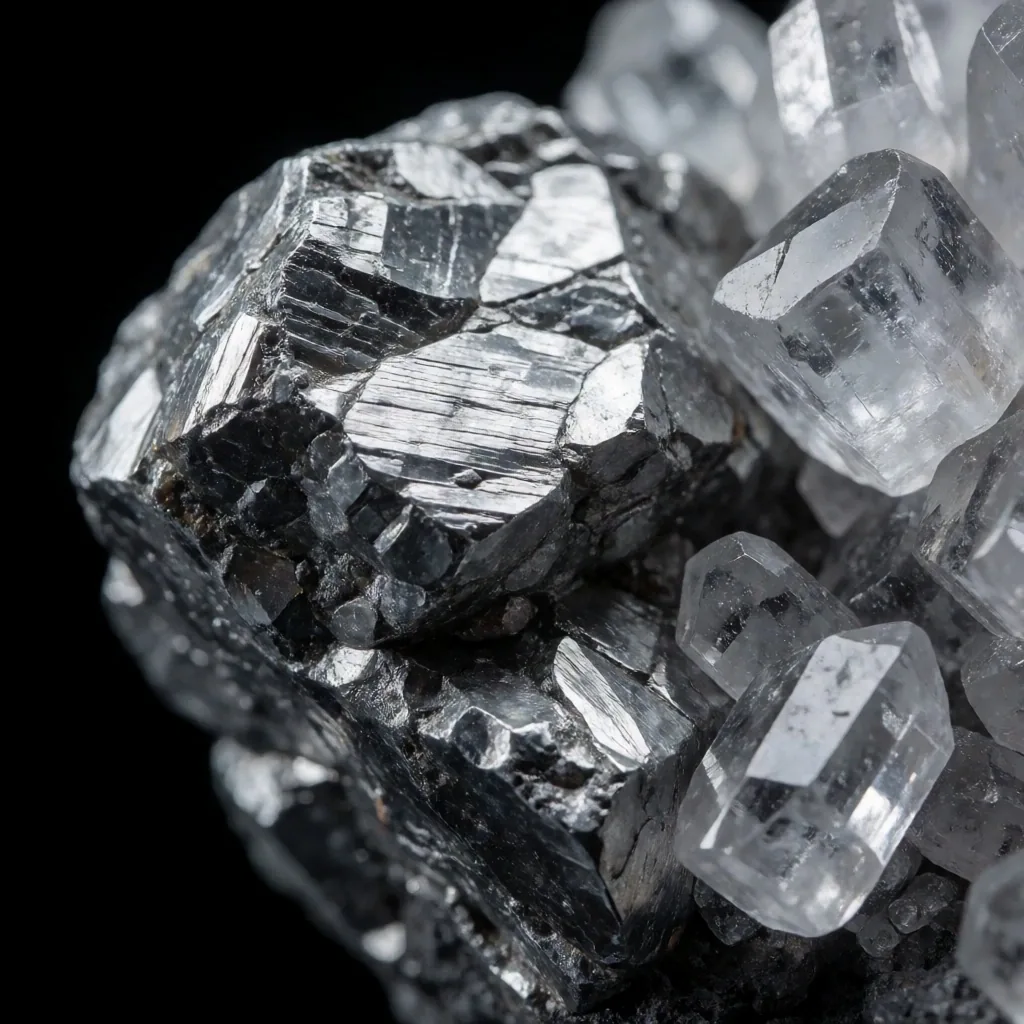
Fig. 02 — Raw Mineral Specimen
Section 02 / Essential Minerals
Zinc & Magnesium
Zinc and Magnesium are two of the most critical minerals for men's health support. Zinc plays a role in protein synthesis and immune function, while Magnesium is involved in over 300 biochemical reactions — including muscle relaxation and sleep quality. Many men in urban environments fall short on Magnesium due to chronic stress and high caffeine consumption, both of which increase excretion.
The form you choose matters as much as the mineral itself. Magnesium oxide, the cheapest and most common form in mass-market products, has poor absorption. Citrates and glycinates are better options — the glycinate form in particular is gentle on the stomach and tends to support evening relaxation. For Zinc, picolinate and bisglycinate offer strong bioavailability. We detail how to read supplement labels and avoid forms that look impressive on paper but pass through the body largely unused.
Zinc
- ▸Protein synthesis and tissue repair
- ▸Immune cell development and function
- ▸Enzymatic reactions across body systems
- ▸Best forms: picolinate, bisglycinate
Magnesium
- ▸Muscle relaxation and contraction balance
- ▸Sleep quality and evening wind-down
- ▸Over 300 enzymatic reactions in the body
- ▸Best forms: glycinate, citrate
Section 03 / Bone Density
Vitamin D & Bone Density
Often called the sunshine vitamin, Vitamin D is crucial even in tropical climates like Indonesia. Indoor work, sun protection, and time spent in air-conditioned environments can all lead to lower levels than you would expect from living near the equator. Vitamin D is essential for calcium absorption and maintaining strong bone structure as you age. It also supports a healthy immune system and plays a role in mood regulation.
Pairing Vitamin D with Vitamin K2 is one of the more useful combinations in men's vitamin formulas. Vitamin D increases calcium absorption from your digestive tract; Vitamin K2 directs that calcium into bones and teeth rather than letting it deposit in soft tissues. The two work as a team — taking D alone without adequate K2 can mean calcium ends up where you do not want it. Our resources help you understand how much Vitamin D is appropriate for your lifestyle and how to choose the right form of K2 (MK-7 is the most studied and longest-lasting in the body).
Calcium Absorption
Vitamin D acts as the gatekeeper — without adequate levels, dietary calcium passes through unabsorbed regardless of intake.
K2 Direction
Vitamin K2 activates proteins that guide calcium into skeletal tissue, keeping it away from arteries and soft tissue.
Indonesia Context
Despite abundant sun, indoor work patterns and sun-conscious clothing mean many Indonesian men still fall below optimal levels.

Section 04 / Antioxidant Support
Vitamins C & E
Vitamins C and E work as a duo to protect your body from environmental pollutants and the physical stress of exercise. Vitamin C is a well-known immune booster that also aids in collagen production — the structural protein behind skin, tendons, and blood vessel walls. Vitamin E protects cell membranes from oxidative damage, acting as a fat-soluble shield where Vitamin C, which is water-soluble, cannot reach.
Including these in your daily men's vitamin formulas helps maintain skin integrity and overall resilience. We discuss the benefits of sourcing these vitamins from natural, food-based complexes — which retain the co-factors and bioflavonoids that isolated synthetic versions strip away. A Vitamin C complex derived from acerola cherry or camu-camu, for example, carries flavonoids that extend its activity in the body far longer than an isolated ascorbic-acid tablet.
Nutrition BasicsSection 05 / Trace Minerals
Selenium & Iodine
While only needed in small amounts, trace minerals like Selenium and Iodine are vital for metabolic regulation. Selenium acts as a potent antioxidant, particularly for the thyroid gland, while Iodine is a key component of thyroid hormones that control your metabolic rate. Balancing these trace elements is a subtle but important part of a complete nutritional strategy — too much can be as unhelpful as too little.
Selenium
A trace mineral that functions as a core component of glutathione peroxidase — one of the body's primary internal antioxidant enzymes. It is concentrated in the thyroid gland, where it helps protect thyroid tissue from the oxidative byproducts of hormone production. Selenium also supports the recycling of Vitamin C and E, extending their useful lifespan in the body.
Natural Sources
Brazil nuts are the richest dietary source — one or two nuts per day can meet most needs. Fish, eggs, and whole grains also contribute, though soil selenium content varies widely by region.
Iodine
An essential component of the thyroid hormones T3 and T4, which regulate the rate at which your body converts food into energy and heat. Without adequate Iodine, the thyroid cannot produce these hormones at the levels your metabolism requires. In coastal regions of Indonesia, dietary intake is often adequate through seafood; inland and mountain-dwelling men may need to pay closer attention.
Natural Sources
Sea vegetables like kelp and wakame, ocean fish, shellfish, and iodized salt. Sea vegetables offer the most concentrated natural source — but portions matter, as excess iodine can be counterproductive.
Section 06 / Strategy
Multivitamin vs. Targeted Supplementation
Choosing between a broad-spectrum multivitamin and specific, high-dose individual nutrients depends on your goals. A multivitamin provides a convenient all-in-one solution for basic maintenance. Targeted supplements let you address specific gaps you have identified — a standalone Magnesium glycinate for sleep, for instance, or a dedicated Vitamin D3 plus K2 drop during months when sun exposure drops. We analyze the benefits of each approach, helping you decide which fits your budget and health priorities. For most men, a high-quality daily formula serves as the best starting point for a healthy lifestyle.
Approach A
Broad-Spectrum Daily
- +Covers all essential bases in one serving — convenient for men who do not want to manage multiple bottles.
- +Cost-effective for general maintenance and a good starting point if you are unsure where your gaps are.
- −Nutrient amounts are set for an average person — may underdose a specific shortfall that needs more attention.
- −Some forms used in all-in-one formulas prioritize stability over absorption to keep everything in one capsule.
Best for: men starting out, general maintenance, busy schedules.
Approach B
Targeted Individual
- +Lets you choose the most bioavailable form of each nutrient at the dose that fits your situation.
- +Addresses specific gaps — higher Magnesium for a high-stress period, extra Vitamin D during monsoon months.
- −Requires more research and label-reading to assemble a complete program without overlap or conflicts.
- −Multiple bottles cost more and demand a consistent routine to manage timing across the day.
Best for: experienced users, men with identified gaps, performance-focused goals.
Many men land on a hybrid approach: a quality daily multivitamin as the baseline, plus one or two targeted additions based on their lifestyle, season, and individual needs. If you are unsure, start with a multivitamin for three months, then assess what still feels off before adding individual nutrients.
Section 07 / Practical Guide
Timing & Absorption
When you take your vitamins can be just as important as what you take. Fat-soluble vitamins — A, D, E, and K — should be consumed with a meal that contains some healthy fats to ensure they are absorbed. Certain B-vitamins are best taken in the morning to support energy throughout the day. We offer practical advice on scheduling your supplements to avoid digestive discomfort and maximize their impact on your vitality.
Morning
With breakfast containing fats
- →B-Complex — take early to support daytime energy metabolism; taking B12 late in the day may interfere with sleep for some men.
- →Vitamin D3 + K2 — pair with a fat-containing meal for absorption; morning sun plus morning D aligns with natural circadian rhythms.
- →Vitamin C — water-soluble and well-tolerated on an empty stomach; supports morning immune function.
Afternoon
With lunch or post-workout
- →Zinc — best with food to avoid nausea; take away from high-calcium meals or iron supplements, which compete for absorption.
- →Vitamin E — fat-soluble, so include with a meal containing oils or fats.
Evening
30 to 60 minutes before sleep
- →Magnesium Glycinate — supports muscle relaxation and sleep quality; the glycinate form is gentle and calming.
- →Selenium — trace mineral, best absorbed away from Vitamin C to avoid reduction interactions; evening with a light meal works well.
Section 08 / Form Quality
Avoiding Synthetic Overload
Many mass-market vitamins use synthetic forms that the body may struggle to recognize or process efficiently. The difference between a cheap vitamin and a good one is rarely the amount on the label — it is the form. Synthetic Vitamin E (dl-alpha-tocopherol) is a single isomer; natural Vitamin E (d-alpha-tocopherol plus mixed tocopherols) is a family of related compounds that work together in ways the isolated version cannot replicate.
We advocate for whole-food or food-state vitamins, which are derived from actual fruit and vegetable concentrates. These forms come with the natural co-factors and enzymes that aid in digestion and transport — the compounds that normally surround a vitamin in its original food source. By choosing natural supplements for men, you ensure that your body receives nutrition in a form that is as close to nature as possible. Natural capsules for strength and vitality are not a marketing label; they are a manufacturing choice that changes how the nutrient behaves once swallowed.
Check AvailabilityForm Comparison
Derived from concentrated fruits, vegetables, and botanicals. Retains co-factors, enzymes, and bioflavonoids that support recognition and uptake.
Isolated vitamin bonded to a food matrix (yeast or fruit pulp). Better than raw isolates but lacks the full spectrum of a true whole-food complex.
Single-molecule forms produced in a laboratory. Often the cheapest option on the shelf. Lacks the co-factors that aid transport and conversion in the body.
Continue Reading
Quick Answers
Reach Us
- Jl. Veteran No. 7
Gambir, Jakarta Pusat, 10110 - +62 21 349 5691
- [email protected]
Working Hours
- Monday — Friday
- 09:00 — 18:00 WIB
- Questions about daily vitamins? Contact us →
The information on this page is educational and intended to help you understand the role of vitamins and minerals in supporting normal bodily functions. NusaSuplemen does not sell pharmaceutical products or make claims about diagnosing, treating, curing, or preventing any condition. If you are considering a new supplement routine, consult a qualified professional who can assess your individual needs.